
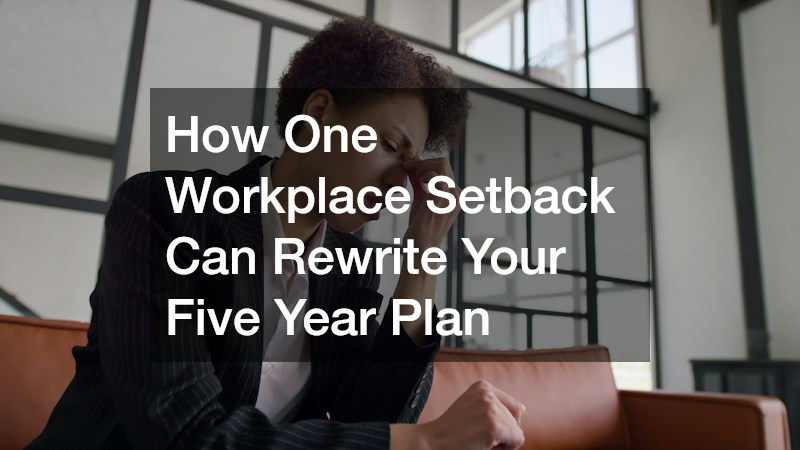

A single bad day at work can feel like it unravels years of careful planning. A sudden layoff, a workplace injury, or a company relocation can change your income, your routine, and your sense of direction almost overnight. The good news is that a setback does not have to mean starting over from zero. With the right information and a clear head, you can adjust your five year plan instead of abandoning it.
Recognize the Setback That Changes Everything
Not every rough day at work qualifies as a true setback worth rebuilding a plan around. A missed deadline, an awkward meeting, or a tense exchange with a coworker will sting for a day or two, but it rarely shifts the trajectory of your career. A genuine disruption is different: it usually involves a loss of income, a physical injury, a forced relocation, or a structural change to your employer that affects your long term path. Think about the markers that separate noise from a real turning point. Did the event change your paycheck, your job title, or your ability to do the work you were trained for? Will its effects still be visible in six months, or even a year? If the answer is yes to any of these, you are likely looking at something that deserves a serious second look rather than a quick vent session. Layoffs, demotions, a company acquisition, or a diagnosis that limits your work capacity all fall into this category, as does a sudden geographic move that puts your current job out of reach. These events tend to share a common thread: they close off options you were counting on and force you to build new ones. Learning to tell the difference between a temporary frustration and a real turning point helps you respond with the right level of urgency. Waiting too long to acknowledge a serious change can cost you time you cannot get back. The first few weeks after a genuine setback are often when the most useful decisions get made, whether that means updating a resume, reassessing finances, or having an honest conversation with a mentor. Treating a minor frustration like a crisis wastes energy, but treating a real crisis like a minor frustration can quietly derail years of planning.
- A layoff or sudden termination that cuts off your income stream overnight, often with little warning beyond a brief meeting and a severance packet
- A workplace injury that limits your ability to perform your job, whether temporarily or permanently, forcing a hard look at physically demanding career paths
- A company merger, acquisition, or relocation that quietly eliminates or displaces your role, even if your performance was never in question
- A missed promotion that signals an invisible ceiling, especially when a less-qualified peer advances instead
- A health scare tied to job stress, burnout, or poor workplace conditions, such as a diagnosed anxiety disorder or a stress-related cardiac event
- A toxic management change or restructuring that makes a once-tolerable job suddenly untenable
- A public failure or high-visibility mistake that damages your internal reputation and stalls your trajectory
Protect Yourself After a Physical Injury on the Job

When a workplace accident causes physical harm, your first priority should be medical attention, followed closely by documentation. Photos, witness names, and a written account of what happened can matter enormously if the incident becomes a legal or insurance issue down the road. Many people underestimate how complicated workplace injury claims can become once employers or insurance companies get involved. This is often when consulting personal injury lawyers becomes a practical step rather than an overreaction, since they can help you understand what compensation you may be entitled to while you figure out your next career move.
Beyond the immediate paperwork, think about how an injury might affect your five year plan in ways that are not obvious right away. A role that once required physical stamina may no longer be realistic, which can mean retraining or shifting into a different type of work entirely. Give yourself permission to grieve the plan you had while you start sketching a revised one. Recovery is rarely linear, and your timeline should reflect that reality rather than an idealized schedule.
Handle Slip and Fall Incidents at Your Workplace
Slip and fall incidents remain one of the most common causes of workplace injury, and they often happen in ordinary places like stairwells, parking lots, or break rooms. These cases can be surprisingly complex because liability depends on factors like maintenance records, weather conditions, and whether proper warning signs were posted. If you are hurt this way, finding the best slip and fall attorney in your area can make a real difference in how your claim is handled and valued. An experienced attorney will know how to gather evidence quickly before conditions change or records disappear.
- Report the incident to a supervisor immediately and get it in writing
- Take photos of the exact location, including any hazards present
- Seek medical evaluation even if injuries seem minor at first
- Keep copies of all medical bills and missed work documentation
- Avoid giving recorded statements to insurers without guidance
Rebuild Financial Stability After a Sudden Job Loss
Losing a job unexpectedly forces immediate decisions about budgeting, benefits, and timelines that most five year plans never accounted for. The first move is usually a hard look at fixed expenses versus flexible ones, so you know exactly how long your savings can stretch. Unemployment benefits, severance packages, and COBRA coverage all have deadlines, and missing them can create unnecessary financial strain. Treat this period as a research phase rather than a panic phase, since rushing into the wrong next job can create a new setback down the line.
It also helps to revisit your long term goals with fresh eyes instead of forcing your old plan onto a new situation. Maybe the five year plan still ends in the same place, just with a different route to get there. Talking to a financial advisor or even a trusted mentor can provide perspective you might not reach on your own. Small, deliberate steps now tend to produce more stable outcomes than dramatic, rushed decisions.
Navigate a Company Relocation Without Losing Momentum
Sometimes the setback is not an injury or a layoff but a company decision to move operations, which can upend your geographic and financial plans overnight. Corporate moving decisions are often made with little warning, leaving employees to decide whether to relocate, negotiate remote work, or search for a new position locally. These moves can affect everything from your housing situation to your partner’s career and your children’s schooling. Weighing the full cost of a move, not just the salary impact, is essential before committing to a decision that reshapes your next five years.
- Ask about relocation assistance, housing stipends, or moving timelines
- Research the cost of living in the new location before accepting
- Consider the impact on family, schools, and existing support systems
- Negotiate remote or hybrid arrangements if relocation is not feasible
- Get any relocation agreement in writing before resigning your current role
Explore Industries That Offer More Stable Long Term Paths

A workplace setback often becomes the push people need to reconsider whether their industry itself is stable or vulnerable to disruption. Some sectors, like infrastructure and construction, tend to offer steadier demand because the work they produce is tied to long term public and private investment. For example, grader blade manufacturing supports road building and land development projects that continue regardless of broader economic swings, making it a field worth researching if you are considering a pivot. Looking at industries with consistent demand can help you choose a new direction that is less likely to hand you another surprise setback.
Researching an industry before jumping in means looking past job titles and into the actual health of the sector. Talk to people currently working in the field, read industry reports, and pay attention to how companies there have weathered past downturns. A five year plan built on a stable foundation is far more resilient than one built on assumptions. This kind of due diligence takes time, but it pays off when you are trying to avoid repeating a painful cycle.
Consider Construction and Contracting as a Career Pivot
For some people, a workplace setback opens the door to a completely different type of work, and construction related fields are worth a serious look. Demand for skilled trades remains strong in many regions, and commercial contractors are often looking for reliable workers willing to learn on the job or through apprenticeship programs. This path can offer more predictable project based income and a tangible sense of progress that office work sometimes lacks. It is not the right fit for everyone, but it is a realistic option worth researching if your old plan no longer fits your circumstances.
- Look into local apprenticeship programs for hands on training
- Research licensing requirements specific to your state or region
- Ask about typical project timelines and seasonal demand patterns
- Compare pay structures between hourly work and project based contracts
Know When to Seek Legal Guidance After a Workplace Accident
Not every workplace incident requires a lawyer, but serious injuries, denied claims, or employer pushback are strong signs that professional guidance is worth pursuing. Finding the best accident attorneys for your specific situation often comes down to their experience with workplace cases rather than general practice background. A good attorney will walk you through your options honestly, including whether a claim is even worth pursuing given the circumstances. Taking this step seriously can protect both your health and your financial future while you work on rebuilding your five year plan.
It is worth remembering that legal guidance is just one piece of recovering from a setback, not the whole solution. Pairing good legal advice with practical steps like updating your resume, reassessing your skills, and setting realistic new milestones gives you a more complete path forward. The goal is not just compensation or a quick fix, but a stable foundation for whatever comes next. A setback handled thoughtfully can still lead somewhere good, even if it looks different than you originally planned.
A workplace setback can feel like it derails everything you worked toward, but it does not have to erase your progress entirely. Taking the right steps, whether that means documenting an injury, researching a new industry, or seeking legal advice, puts you back in control of your own timeline. Your five year plan was never meant to be rigid, and adjusting it after a setback is a sign of resilience, not failure. Start with one clear action today, and let the rest of the plan take shape from there.