
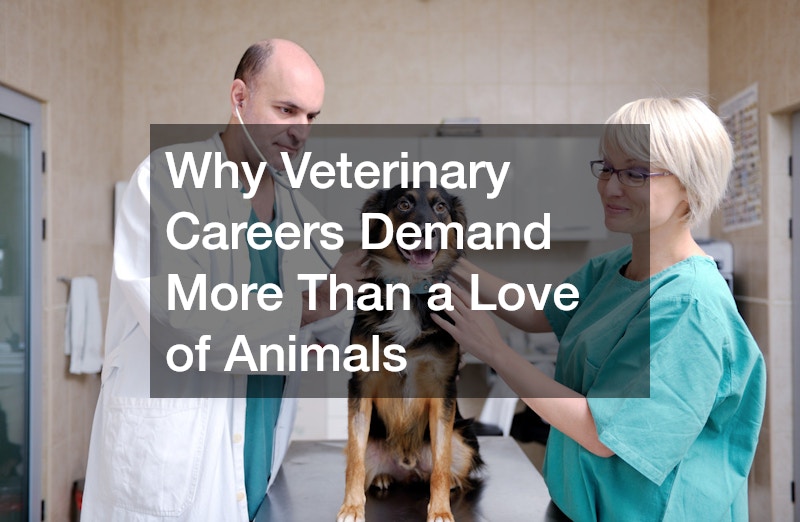

Thinking about a career working with animals? It’s easy to imagine the job as an endless stream of puppy cuddles and grateful pet owners, but the reality is far more demanding and far more interesting. Veterinary work blends science, business, physical stamina, and emotional resilience into one profession, and understanding that mix matters whether you’re considering the career yourself or simply trying to choose the right care for your own animals. This article breaks down what actually goes into veterinary work so you can make sense of what you’re seeing the next time you walk into an animal hospital or call for help in a crisis.
The Science Behind the Stethoscope
Veterinary professionals spend years mastering anatomy, pharmacology, surgery, and diagnostics across multiple species, not just one. A single afternoon might require switching mental gears from treating a rabbit’s dental issue to interpreting bloodwork for a dog with kidney disease. This constant shifting demands a depth of scientific knowledge that goes well beyond basic animal care instincts.
Because animals cannot describe their symptoms, veterinarians rely heavily on physical examination skills, diagnostic imaging, and lab work to piece together what’s wrong. That detective work requires patience and precision, since a missed detail can delay treatment or lead to the wrong diagnosis entirely.
Handling Crisis Situations Under Pressure

Some of the most demanding moments in this field happen outside regular business hours, when an animal’s condition suddenly worsens and owners have nowhere else to turn. This is where emergency vets play a critical role, stepping in during nights, weekends, and holidays to manage trauma, poisoning, difficult births, and other life-threatening situations with little warning and often incomplete information.
Working in emergency care means making fast decisions with limited time, often while a frightened owner watches and waits for answers. The pace is unpredictable, the stakes are high, and there’s rarely a script to follow, which is why this branch of veterinary work attracts professionals who thrive under pressure rather than those looking for a calm, predictable schedule.
Running a Facility Like a Small Business
Behind every appointment is a functioning business that has to manage staffing, inventory, equipment maintenance, and finances. Vet clinics operate much like any small medical practice, juggling insurance questions, scheduling logistics, and the rising costs of specialized equipment while still trying to keep care affordable for pet owners. Ordering and tracking inventory alone is a constant balancing act. Vaccines, medications, surgical supplies, and diagnostic materials often have strict storage requirements and expiration dates, so overordering wastes money while underordering risks delaying care. Add in the payroll for veterinary technicians, receptionists, and support staff, and clinic owners are essentially running a small logistics operation alongside their medical one. Equipment costs add another layer of complexity. Digital X-ray machines, ultrasound units, and in-house lab analyzers can each run into the tens of thousands of dollars, and they require regular maintenance and eventual replacement. Clinics have to weigh these investments against what local pet owners can realistically afford, which often means setting payment plans or offering tiered service options. On top of all this, there’s the administrative side: coordinating pet insurance claims, managing appointment scheduling to avoid bottlenecks, and staying compliant with state licensing and safety regulations. A veterinarian who never learned basic business or financial planning can quickly find themselves overwhelmed by the operational demands that have nothing to do with medicine itself.
Beyond the exam room, veterinary professionals are often running a small business whether they trained for it or not. Practice owners and managers juggle payroll, inventory ordering, equipment maintenance, and vendor contracts, all while keeping the lights on in a field with notoriously thin profit margins. Scheduling alone is a constant balancing act, fitting emergency walk-ins around routine appointments without burning out staff or leaving exam rooms empty. Staff at these clinics also have to manage client communication, which often means explaining complex medical decisions in plain language and helping families weigh treatment options against cost. A single conversation might involve outlining the difference between a $200 conservative treatment plan and a $2,000 surgery, then supporting a client through the emotional weight of that decision. Front-desk teams and technicians frequently act as translators between veterinarians and worried pet owners, softening clinical language without diluting the facts. This administrative and interpersonal workload is a significant part of the job that rarely gets mentioned in career descriptions focused solely on animal care. Add in insurance claims, digital record-keeping, and compliance with state licensing and controlled-substance regulations, and it becomes clear that clinical skill is only one piece of what keeps a practice functioning day to day.
- Ordering and tracking medications, vaccines, and surgical supplies, while watching expiration dates and controlled-substance logs
- Coordinating staff schedules across exam rooms, surgery, and boarding areas, often juggling part-time vets, techs, and front-desk staff
- Managing client billing and insurance claim questions, including payment plans for costly procedures
- Maintaining diagnostic equipment like x-ray machines and ultrasound units, plus budgeting for repairs or upgrades
- Keeping up with continuing education and licensing requirements for both veterinarians and support staff
- Negotiating vendor contracts for lab work, pharmaceuticals, and equipment leases to control overhead costs
- Ensuring compliance with OSHA and state regulations around biohazard disposal and controlled substances
Delivering Difficult News With Compassion

Veterinary professionals regularly sit with grieving families, deliver terminal diagnoses, and help owners decide when to say goodbye. This emotional labor is constant and cumulative, and it takes a genuine skill set beyond medical knowledge to do it well without becoming detached or overwhelmed.
Compassion fatigue is a documented risk in this field, and professionals often need to develop coping strategies just to sustain a long career. Learning to balance empathy with emotional boundaries is something taught far less often than clinical skills, yet it’s just as essential to lasting in this line of work.
Adapting Care to Different Animal Environments
Not all animal care happens inside a clinic. Large animal veterinarians frequently travel to farms, stables, and rural properties, adjusting their approach based on the environment and the specific needs of livestock or performance animals. A vet might spend the morning at a horse boarding facility checking hooves and respiratory health, then head to a dairy farm in the afternoon for herd health work.
This kind of fieldwork requires physical stamina, comfort working outdoors in all weather, and the ability to handle large or unpredictable animals safely. It also demands strong communication with property managers and owners who may have limited veterinary knowledge but deep practical experience with their animals.
- Traveling with portable diagnostic and treatment equipment
- Adjusting techniques for outdoor or barn settings versus a clinical exam room
- Building trust with owners and handlers unfamiliar with medical terminology
- Managing physically demanding tasks like restraining large animals safely
Veterinary careers ask for scientific expertise, business savvy, emotional strength, and physical adaptability all at once, which is exactly why the work is so respected and so demanding. If you’re weighing this path for yourself, spend time shadowing professionals in different settings to see which environment fits your strengths. And if you’re simply researching care options for your own animals, this deeper understanding can help you appreciate the full scope of what your veterinary team handles every day.