
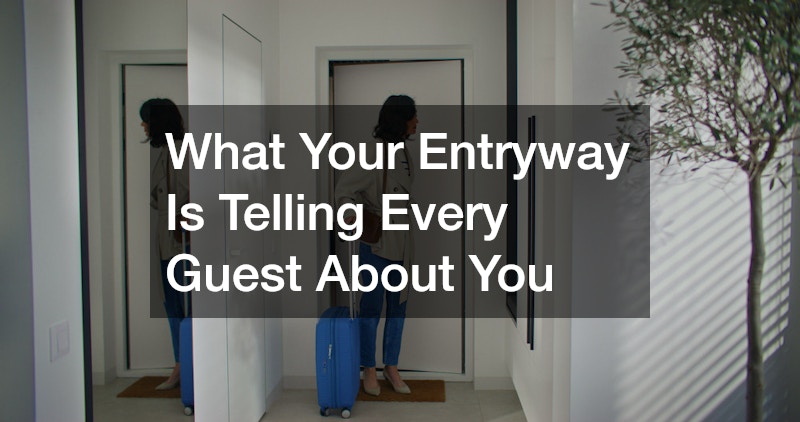

The entryway is often treated as a mere transitional zone—a place to kick off shoes, drop mail, and hang coats. However, environmental psychology and spatial design reveal that this small area carries an immense amount of communication power. Before a guest ever tastes your cooking, sits on your sofa, or engages in deep conversation, your front entry has already delivered a silent thesis about who you are.
It acts as a physical threshold between the chaotic outside world and your personal sanctuary. When someone walks through the front door, their brain instantly processes sensory cues to evaluate safety, comfort, and the overall mood of the household. A well-maintained foyer suggests an organized mind and a welcoming host, while a chaotic landing pad can inadvertently project stress and neglect. Understanding how to curate this visual greeting allows you to take control of the narrative your home presents.
The Science of First Impressions
Human beings are wired to make rapid visual assessments of their surroundings. This evolutionary trait once helped our ancestors determine whether a new environment was secure, but in modern life, it dictates how we perceive hospitality and personal spaces. When a visitor enters your home, their subconscious immediately begins mapping out the environment.
According to research synthesized by the National Home Improvement Council, visitors form a definitive judgment about a home in a mere 38 seconds. Within this initial half-minute window, guests evaluate everything from lighting and scents to general orderliness, establishing a subconscious impression that colors the rest of their visit.
This brief timeframe highlights the incredible leverage your front hall holds. You do not need to execute a full renovation of your entire living space to change how people perceive your environment. By concentrating your styling efforts on those first few steps inside the front door, you set an immediate emotional tone.
-
Sight: Lighting level, color harmony, and visual organization indicate how much thought you put into your living environment.
-
Sound: Acoustic warmth—achieved through rugs, runners, or wall hangings—signals a tranquil, peaceful refuge.
-
Smell: Ambient scents like subtle wood accents, citrus, or clean linen suggest meticulous care and hygiene.
-
Touch: The texture of landing surfaces, flooring, and wall finishes adds a tactile layer to your home’s personality.
When these sensory elements align, your entrance becomes a warm embrace rather than an overwhelming obstacle course.
Intentional vs Accidental Styling
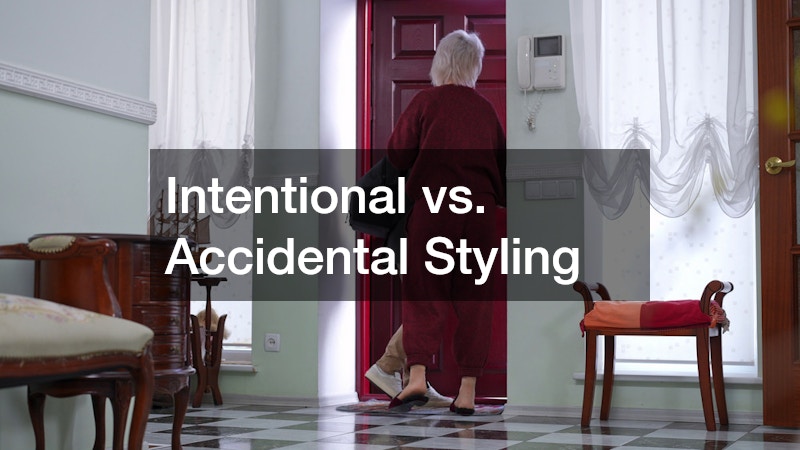
The difference between a house that feels lived-in and one that feels chaotic usually comes down to intent. Intentional design does not mean your space must look like a minimalist museum or a high-end hotel lobby. Rather, it means that every item present serves either a clear functional purpose or an explicit aesthetic goal.
Accidental styling, on the other hand, happens when daily life takes over without a structural system in place. It is the result of passive accumulation. When shoes stack up near the threshold, junk mail collects on the console table, and outerwear spills off overflowing coat racks, the space loses its warmth. This sends an unintended message to visitors: life here is overwhelming, and management is reactive rather than proactive.
To move from an accidental setup to an intentional entry, evaluate the primary functional needs of your household:
-
Drop Zones: Designate a specific tray, bowl, or small drawer exclusively for keys, wallets, and sunglasses so they never sit scattered across open surfaces.
-
Shoe Management: Swap out chaotic open stacks for covered storage benches, pull-out cabinets, or tailored shelving to keep footwear neatly out of direct sightlines.
-
Coat Storage: Limit wall hooks to daily essentials, storing seasonal or extra coats in an interior closet so the foyer never looks overburdened.
-
Surface Balance: Ensure console tables maintain a balance of open space alongside functional items like lamps or catch-alls.
When guests observe an intentional entryway, they intuitively register that you value structure and comfort. You signal that you take pride in your environment and that you have thoughtfully prepared a space for them to enter.
Structural Elements and Durability
Beyond furniture and decorative pieces, the foundational materials used in your foyer lay the physical groundwork for how the space is perceived. Because the entryway experiences the highest foot traffic in the house, selecting resilient building materials signals an appreciation for craftsmanship, longevity, and practical design. High-quality flooring and masonry elements set a permanent tone before any portable decor is placed.
Architectural choices like stone tile, exposed brickwork, and custom plaster finishes carry tactile weight. For instance, coarse aggregate materials like sand serve as an essential raw component in the concrete, mortar, and plaster mixes that form durable entry flooring and masonry features. Incorporating these raw, grounded building materials creates an immediate sense of structural permanence and organic texture beneath your guests’ feet.
By prioritizing foundational materials that stand up to heavy daily wear, your threshold maintains its polished, welcoming appearance effortlessly over time, reinforcing the impression that your home is built to last.
Personality Without Clutter
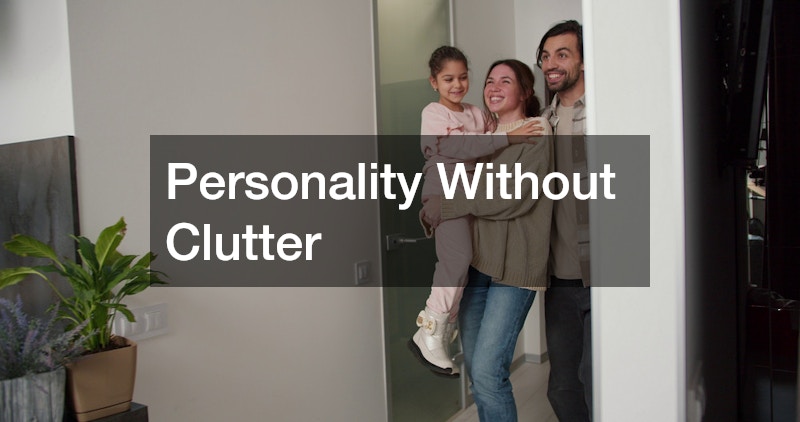
One of the biggest traps homeowners fall into when dressing up an entryway is overdecorating. In an attempt to make the space feel curated, personal, and lived-in, it is easy to pile on picture frames, travel souvenirs, decorative candles, and wall signage. Unfortunately, small spaces accumulate visual noise very quickly, and excess decor easily reads as clutter.
Showcasing your personality requires restraint. The goal is to select a few high-impact pieces that tell a coherent story about your interests and lifestyle without overwhelming the eye.
Consider these curated strategies to express character efficiently:
-
Statement Lighting: A distinctive pendant light or a classic table lamp adds functional warmth while immediately defining your design style, whether traditional, modern, or bohemian.
-
Curated Artwork: Instead of a dense gallery wall that overcrowds a narrow hall, opt for one or two larger, high-quality framed pieces that evoke a specific mood or memory.
-
Living Elements: A vibrant potted plant or fresh floral arrangement introduces immediate life, vitality, and organic texture to the space.
-
Architectural Mirrors: A wall-mounted mirror serves a dual purpose by reflecting natural light to enlarge narrow hallways while giving guests a quick, practical checkpoint upon entry.
-
Textile Grounding: A durable, beautifully patterned runner rug introduces color and soft texture while protecting high-traffic flooring underneath.
By choosing fewer, higher-quality items, you give each object space to breathe. This approach demonstrates confidence in your aesthetic choices and conveys a sense of calm sophistication. Your guests won’t feel bombarded by objects; instead, they will feel invited into a space that is both thoughtful and serene.
Final Thoughts
Your entryway is far more than a simple passthrough between the indoors and outdoors—it serves as the opening chapter of your home’s story. In just a few seconds, visitors draw conclusions about your lifestyle, organization, and hospitality based entirely on the visual and sensory cues present at your front door. By replacing accidental clutter with intentional design and selecting personal accents with restraint, you transform a functional landing zone into a memorable greeting. A curated, clutter-free threshold welcomes guests with immediate warmth, setting a positive tone for everything that lies beyond it.