


You slept eight hours. You even went to bed early. Yet the mirror shows the same heavy eyes, puffed cheeks, and colorless skin that greet you every morning. That disconnect — between the hours logged and the face staring back — is one of the more quietly frustrating experiences people have, and it rarely gets a satisfying explanation. The causes aren’t always obvious, and several of them operate entirely while you’re unconscious. Understanding what’s actually happening, rather than reaching for more concealer, tends to produce better results.
What Happens to Your Face While You Sleep
Sleep is not a passive state for your skin. The body cycles through repair processes during the night — collagen synthesis, cellular turnover, and inflammatory regulation all peak during deep sleep stages. When those processes are interrupted or compressed, the visible evidence shows up by morning.
Fluid redistribution is one of the more overlooked contributors. Lying horizontal allows interstitial fluid to move toward the face and collect in soft tissue around the eyes and lower cheeks. Normally, deep sleep and proper lymphatic drainage help clear that buildup before you wake. Disrupted sleep compresses or skips the stages where drainage is most active, leaving fluid sitting in place.
Position matters here in ways most people don’t account for. Sleeping face-down or on one side consistently — particularly with a pillow pressing against the cheek — can create asymmetric puffiness that builds over time. Trying a slightly elevated sleeping position, using a wedge pillow raising the head by about 15 to 20 degrees, can reduce overnight fluid pooling noticeably within a week or two.
Temperature and humidity in the bedroom also factor in. Dry, warm air draws moisture from skin throughout the night. Skin that wakes up slightly dehydrated loses its usual plumpness, which makes fine lines and dullness more prominent before you’ve even had a chance to splash water on your face. A room humidifier set between 40 and 60 percent relative humidity is enough to make a measurable difference for most people.
The Hidden Sleep Disruptors Affecting Appearance
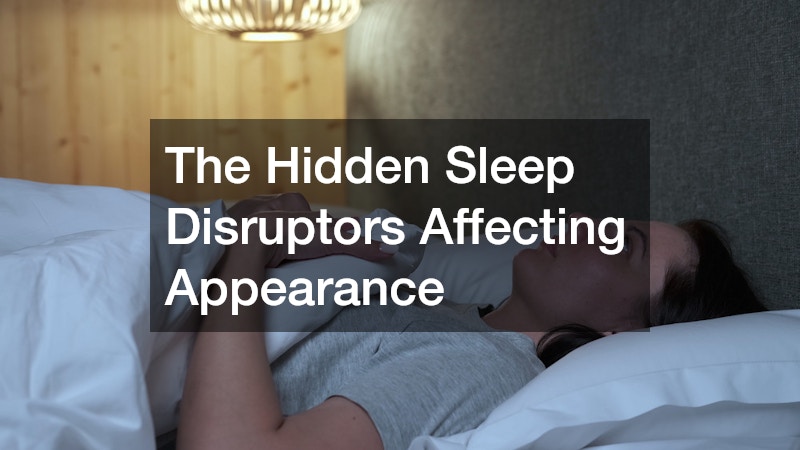
Getting the hours isn’t the same as getting the quality. Several common conditions fragment sleep architecture without the person ever consciously waking — and the face reflects that deprivation just as it would after a short night.
Mouth breathing during sleep dries out mucosal tissue, increases cortisol output, and keeps the body in a lighter sleep stage for longer. The result by morning is often dry, flushed, or vaguely inflamed-looking skin. Nasal strips, positional adjustments, or treatment of underlying congestion can address mild cases. For people whose breathing is significantly disrupted, exploring sleep apnea solutions addresses a more structural cause that nasal strips alone won’t resolve.
Cortisol, the stress hormone, plays a significant role in appearance. Even low-grade anxiety that doesn’t feel acute enough to call insomnia can spike cortisol during the night’s earlier stages, suppressing the growth hormone pulses that normally drive skin repair. The practical indicator: people under chronic moderate stress often notice their skin looking more aged or reactive even when they feel they’re sleeping reasonably well.
Alcohol is widely misunderstood here. It shortens the time to sleep onset, which many people interpret as a sleep aid, but it suppresses REM sleep and causes a rebound arousal effect in the second half of the night. The morning result is typically increased puffiness, redness, and pronounced shadows — even from one drink consumed close to bedtime. Cutting off alcohol intake at least three hours before sleep, rather than one hour, produces a visibly different morning outcome for most regular drinkers.
Dietary and Circulatory Patterns That Show Up on Your Face
What happens the evening before a sleep cycle shapes how the face looks the morning after. Sodium intake is the most direct lever most people can pull. High-sodium meals — particularly those consumed within two to three hours of bed — draw water into tissue and hold it there. The bloated, heavy appearance common after a salty restaurant meal or late takeout isn’t imaginary; it’s osmotic fluid retention that peaks overnight and is still visible by 7 a.m.
Sugar follows a similar but slower mechanism. Glycation — where excess glucose molecules bond with collagen and elastin fibers — progressively reduces skin resilience and increases a dull, slightly yellowish skin tone. This isn’t a single-meal effect; it accumulates over months. But people who significantly reduce added sugar intake for eight to twelve weeks often report that their skin tone looks visibly clearer and more even, independent of any topical product changes.
Circulation affects skin color and vitality in real time. Poor peripheral circulation — common in people who sit for long periods or have low cardiovascular activity levels — means less oxygenated blood is reaching facial capillaries during the night. That’s part of why the same person can look noticeably more alert after a week of regular morning walks than after a week of sedentary rest, even with identical sleep hours. Light aerobic activity most days of the week, sustained for at least 20 minutes, produces measurable improvements in skin perfusion.
There’s also the question of hydration timing. Drinking large amounts of water immediately before bed doesn’t improve skin hydration overnight — it mainly increases the likelihood of waking at night, which disrupts sleep quality. Spreading water intake across the day and tapering off about 90 minutes before bed supports both hydration and uninterrupted sleep.
Skincare Habits That Quietly Work Against You
The skincare routine applied before bed is intended to help, but several common habits undermine the face’s overnight recovery. Heavy occlusive creams applied to already-swollen areas can trap fluid rather than relieving it. Active ingredients — particularly retinoids and exfoliating acids — are genuinely beneficial for long-term skin renewal, but overuse causes barrier disruption that shows as redness and sensitivity by morning. Using a retinoid product more than three nights per week before the skin has adjusted is one of the more consistent ways people accelerate rather than prevent skin fatigue.
Pillowcase material is underestimated as a variable. Standard cotton weaves create surface friction that can crease skin repeatedly over eight hours. Silk or tightly-woven satin pillowcases reduce that mechanical stress. The benefit is incremental but real — particularly around the eyes and mouth, where repeated compression accelerates the appearance of fine lines over years.
Eye rubbing at night, often done unconsciously, breaks capillaries and causes the periorbital tissue to swell and darken. People with seasonal allergies are especially prone to this, which explains why allergy season reliably worsens under-eye circles. Using a prescribed antihistamine taken in the evening rather than the morning — where the sedating side effect works in your favor — often reduces nighttime rubbing and the visible damage it causes.
The Morning Face as Diagnostic Tool
Treating the tired morning face purely as a cosmetic problem to correct misses the more useful signal. That puffiness, dullness, or greyness is a readout of what happened while you were unconscious — fluid dynamics, sleep quality, dietary patterns, and circulation all expressed on one visible surface before you’ve said a word.
The productive approach is to observe patterns rather than react to individual bad mornings. Note which variables preceded the worst mornings — late meals, alcohol, high stress, dry air, a certain sleeping position — and test changes one at a time over two to three weeks before assessing results. Skin responds on a slower timeline than most people expect. Consistent sleep architecture, reduced evening sodium, and adequate humidity tend to produce visible changes within three to four weeks.