
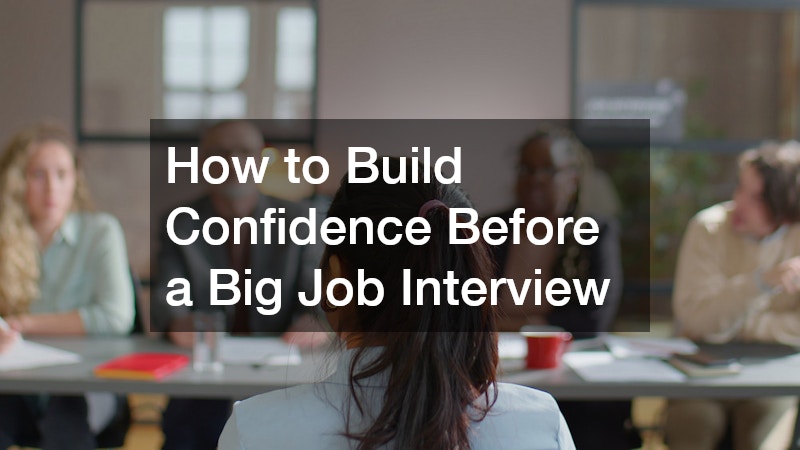

Job interviews are high-stakes by design. Employers use them to assess not just what you know, but how you carry yourself under pressure. The problem is that pressure itself often undermines the performance it’s meant to reveal. Candidates who are genuinely qualified walk out of interviews having undersold themselves, not because they lacked the skills, but because their confidence failed them at the wrong moment. Building real confidence before an interview isn’t about eliminating nerves — it’s about making sure preparation, presentation, and mental readiness are working together before you walk through the door.
Preparation Is the Foundation of Real Confidence
Confidence that holds under pressure is almost always rooted in preparation that goes beyond reviewing your resume. Candidates who feel shaky during interviews frequently know their own background well enough — what they haven’t done is connected that background to the specific role in front of them.
Start by mapping your three to five strongest experiences to the job description line by line. For each requirement listed, identify a concrete example from your work history that demonstrates it. If a role requires project management experience, don’t settle for a vague mental note — write out the situation, what you did, the result, and a number that quantifies it (budget managed, timeline met, team size led). This exercise takes about two hours done properly, and it converts abstract self-awareness into ready answers.
The question of depth versus breadth matters here. Spending three hours on the company’s industry context will serve most candidates better than spending those same hours rehearsing generic answers. Interviewers consistently respond to candidates who understand what the organization is actually trying to accomplish — not just what the job title says.
- Research the company’s most recent public announcements, earnings calls, or press releases within the last 90 days to surface current priorities.
- Prepare at least two specific questions that can only be asked of that company, not recycled across every application.
- Practice answering behavioral questions out loud — not in your head — at least three times before the interview date.
The Physical Dimension Most Candidates Underestimate

Confidence isn’t purely psychological. How you feel physically on the day of an interview directly affects how you come across — posture, eye contact, energy level, and even the quality of your thinking. Research published in psychological journals has consistently found that physical state influences cognitive performance and self-perception in measurable ways.
Sleep is the most undervalued variable. Cutting sleep the night before an interview to prepare more is a trade-off that almost always goes the wrong way. The cognitive sharpness lost from six hours of sleep versus eight is harder to recover from with coffee than most people expect. Aim for a consistent sleep schedule starting at least three nights before the interview, not just the night before.
On the morning of the interview, physical movement helps. A 20-minute walk or light workout raises alertness and reduces cortisol in ways that a second cup of coffee doesn’t replicate. Eating a balanced meal two to three hours before the interview matters more than most candidates plan for — low blood sugar mid-interview is a real performance drag.
Appearance preparation also plays a role that goes deeper than aesthetics. Feeling put-together reduces cognitive load — when you’re not second-guessing how you look, you can focus entirely on the conversation. This applies to clothes, grooming, and physical comfort together. If you’ve been self-conscious about your smile, for example, even a straightforward cosmetic dental procedure completed well before the interview date can remove a distraction that might otherwise occupy mental bandwidth during the meeting itself.
Rehearsal Strategies That Actually Work
The gap between thinking through answers and speaking them aloud is larger than most people realize until they’re in the room. Silent rehearsal creates a false sense of readiness. The mechanics of forming a clear sentence under mild pressure, at the right pace, without trailing off — those only develop through spoken practice.
Mock interviews are the most effective tool, and the format matters. Practicing with someone who will ask follow-up questions — rather than just listening to a prepared answer — more closely replicates the actual interview dynamic. If no willing partner is available, recording yourself on video and watching it back is uncomfortable but highly effective. Most candidates identify at least two or three habits they weren’t aware of: filler words, rushed pacing, or answers that run 90 seconds longer than they should.
The right length for most behavioral answers is between 90 seconds and two minutes. Shorter often signals underprepared; longer risks losing the interviewer’s attention. Timing your answers during practice gives you a calibration you won’t have if you only rehearse mentally.
- Conduct at least one full mock interview with timed responses no later than two days before the real interview.
- Record a two-minute video answer to the question “Tell me about yourself” and review it for pacing and filler words.
- Rehearse two answers that involve numbers — metrics, timelines, or budget figures — since specificity under pressure is where most candidates struggle most.
Managing Anxiety in the Final 24 Hours
Anxiety before an important event is normal and, within limits, useful. The goal in the final day isn’t to eliminate nervousness but to keep it from snowballing into the kind of rumination that degrades performance. There’s a meaningful difference between productive last-minute review and anxious re-rehearsal that erodes rather than builds confidence.
The productive path: confirm logistics the evening before — location, travel time, parking, who you’re meeting. Add a 30-minute buffer beyond what you think you need. Logistical surprises on interview morning spike cortisol in ways that take an hour to recover from, and that recovery window often doesn’t exist.
Avoid excessive caffeine the morning of the interview if you’re already anxious. Caffeine amplifies the physiological symptoms of nervousness — elevated heart rate, slight hand tremor — which can be interpreted by your own brain as evidence of greater anxiety than actually exists. Switching to half-strength coffee or green tea cuts the edge without the performance drop of going without entirely.
Reframing the interview as a two-way conversation rather than an evaluation you’re subjected to is more than a motivational platitude — it’s structurally accurate. You are assessing whether this role and organization suit your career trajectory just as much as they’re assessing your fit. Candidates who enter with that framing tend to ask better questions and project more natural authority.
What to Do When Confidence Wavers in the Room
Even well-prepared candidates hit moments mid-interview where an unexpected question lands and confidence briefly drops. How you handle those moments is itself part of what interviewers are watching for, often more than the answer itself.
Pausing before answering is not a weakness — it signals thoughtfulness. A two to three second pause before a difficult answer reads as considered, not unprepared. Saying “That’s a good question, let me think through that for a moment” is acceptable once in an interview; using it for every hard question signals avoidance.
If a question catches you genuinely off guard, it’s better to name what you’re doing than to fill the silence with unfocused talking. “I want to make sure I answer that specifically — can I take a moment?” almost always lands better than an anxious, rambling response.
The instinct to apologize for imperfect answers — “I’m not sure this is exactly what you’re looking for, but…” — actively undermines the impression you’re trying to create. Own the answer you give. If it’s incomplete, offer to follow up after the interview with a more detailed response, and actually send that follow-up within 24 hours.
Turning the Interview Into a Conversation You’re Ready For
The difference between a candidate who survives an interview and one who genuinely connects with the panel usually comes down to one thing: whether they came in ready to have a conversation or ready to perform a script. Both require preparation, but the second requires something the first doesn’t — enough confidence in your own judgment to engage rather than just respond.
Prepare two or three moments in your background that you can work in naturally, not just when a specific question invites them. Interviewers who feel like they’re having a conversation rather than administering a test are more likely to advocate for a candidate afterward. That outcome doesn’t happen by accident — it’s the result of every step taken in the days before the meeting.