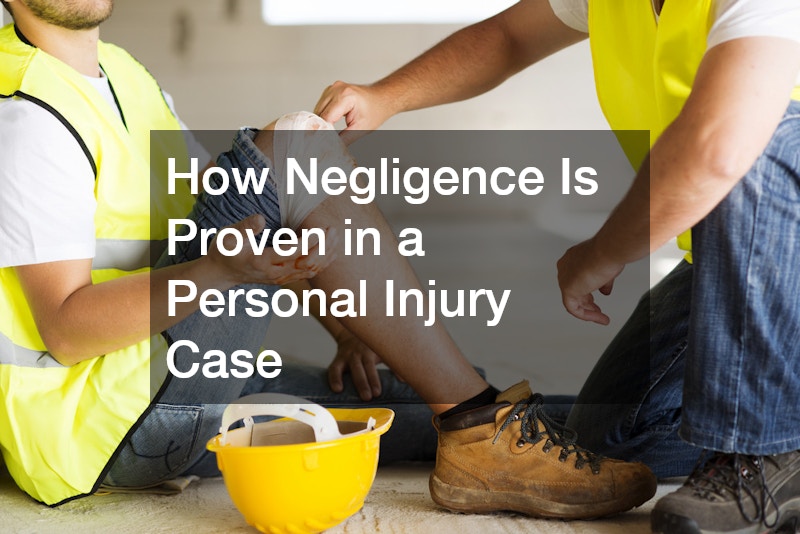

When an individual suffers due to another person’s careless or reckless actions, the law often turns on one key question: Was negligence involved? Grasping the process of proving negligence in a personal injury case can empower you to safeguard your rights and pursue the compensation you rightfully deserve. At Witherite Law Group, we dedicate ourselves daily to constructing robust legal claims by effectively demonstrating negligence, and here’s the process we follow.
What Constitutes Negligence?
In the realm of personal injury, negligence refers to the failure of an individual to exercise reasonable care, leading to the infliction of harm. In straightforward terms, if an individual could have avoided an injury by behaving more responsibly and chose not to, they might be held legally accountable for the resulting harm.
Negligence is not concerned with intent; the intention behind causing harm is irrelevant. The key consideration is whether their actions did not meet the expected standard of care, given the situation.
The attorneys at Witherite Law Group, with their extensive experience in personal injury law, understand that establishing negligence necessitates thorough investigation and evidence, ultimately focusing on four crucial elements.
1. The Defendant Had a Responsibility to Exercise Care
The initial step in establishing negligence involves demonstrating that the individual or organization you are pursuing had a legal obligation to you. Many individuals may think this appears complex, yet in daily life, responsibilities of care are prevalent and simple.
For instance:
-
Drivers must follow traffic regulations and guarantee the safe operation of their vehicles.
-
Property owners must maintain a reasonable standard of safety on their premises for visitors’ benefit.
-
Healthcare providers must provide care that meets established standards.
In legal terminology, “duty of care” refers to the acknowledgment by the law of a responsibility to prevent foreseeable harm.
2. The Obligation Was Violated
After establishing a duty of care, the next inquiry is whether it was breached.
A breach occurs when an individual does not behave as a reasonable person would in comparable situations. This is not a matter of opinion; it is evaluated based on the actions of a typical, prudent individual.
Instances of violations encompass:
-
A driver who is texting while driving and fails to stop at a red light
-
A store owner neglecting to address a known spill
-
A surgeon committing an obviously preventable error
At Witherite Law Group, our team meticulously examines the details, analyzing police reports, interviewing witnesses, reconstructing accidents, consulting experts, and collecting the evidence necessary to demonstrate that the defendant’s actions were unreasonable.
3. The Breach Resulted in Your Injury
Even if a duty was violated, it remains necessary to demonstrate that this violation directly resulted in your injury. This step, known as causation, necessitates a distinct connection between the defendant’s actions and the harm you experienced.
Legal causation consists of two components:
-
Actual cause, often referred to as “cause in fact,” indicates that the injury would not have occurred if not for the defendant’s actions.
-
The injury was a predictable outcome of the defendant’s actions.
For example, when a driver ignores a stop sign and crashes into another vehicle, it is highly likely that the accident could lead to broken bones, whiplash, or even more serious injuries. The immediate reason for that is.
Establishing causation frequently necessitates medical records, expert testimony, and occasionally accident reconstruction, all of which are areas where Witherite Law Group’s expertise truly stands out.
4. You Experienced Real Damages
The last component of the negligence puzzle is damages. Even if all the prior elements are met, a case cannot exist unless you have experienced actual losses, whether they are physical, emotional, or financial.
Typical damages in personal injury cases consist of:
-
Healthcare costs (present and upcoming)
-
Wages that have been lost
-
Distress and anguish
-
Damage to property
-
The inability to find pleasure in life
Our team collaborates with experts who can assess the complete scope of your damages, ensuring you receive the full value of your claim.
The Importance of Legal Guidance
Demonstrating negligence is a task that typically requires assistance from others. Insurance companies are well-versed in the law and frequently attempt to reduce payouts by challenging causation, minimizing injuries, or placing blame on you, the injured party.
At Witherite Law Group, our personal injury lawyers are skilled in constructing persuasive negligence claims from beginning to end. We take care of the investigation, evidence collection, negotiations, and, if needed, litigation, allowing you to concentrate on your healing process.
Negligence might appear straightforward, yet establishing it demands accuracy and expertise. If you have suffered an injury due to another person’s negligence, it is essential to protect your rights.
Contact Witherite Law Group today for a free consultation and find out how we can help you prove negligence and fight for the compensation you deserve.